
The endocannabinoid system is one of the important regulatory systems present in the human body. Its task is to participate in the maintenance of biological balance, known as homeostasis. This system was discovered relatively recently, but is now being intensively studied by scientists around the world.
Interest in the endocannabinoid system has increased especially in the context of research on natural compounds found in cannabis, such as cannabinoids.
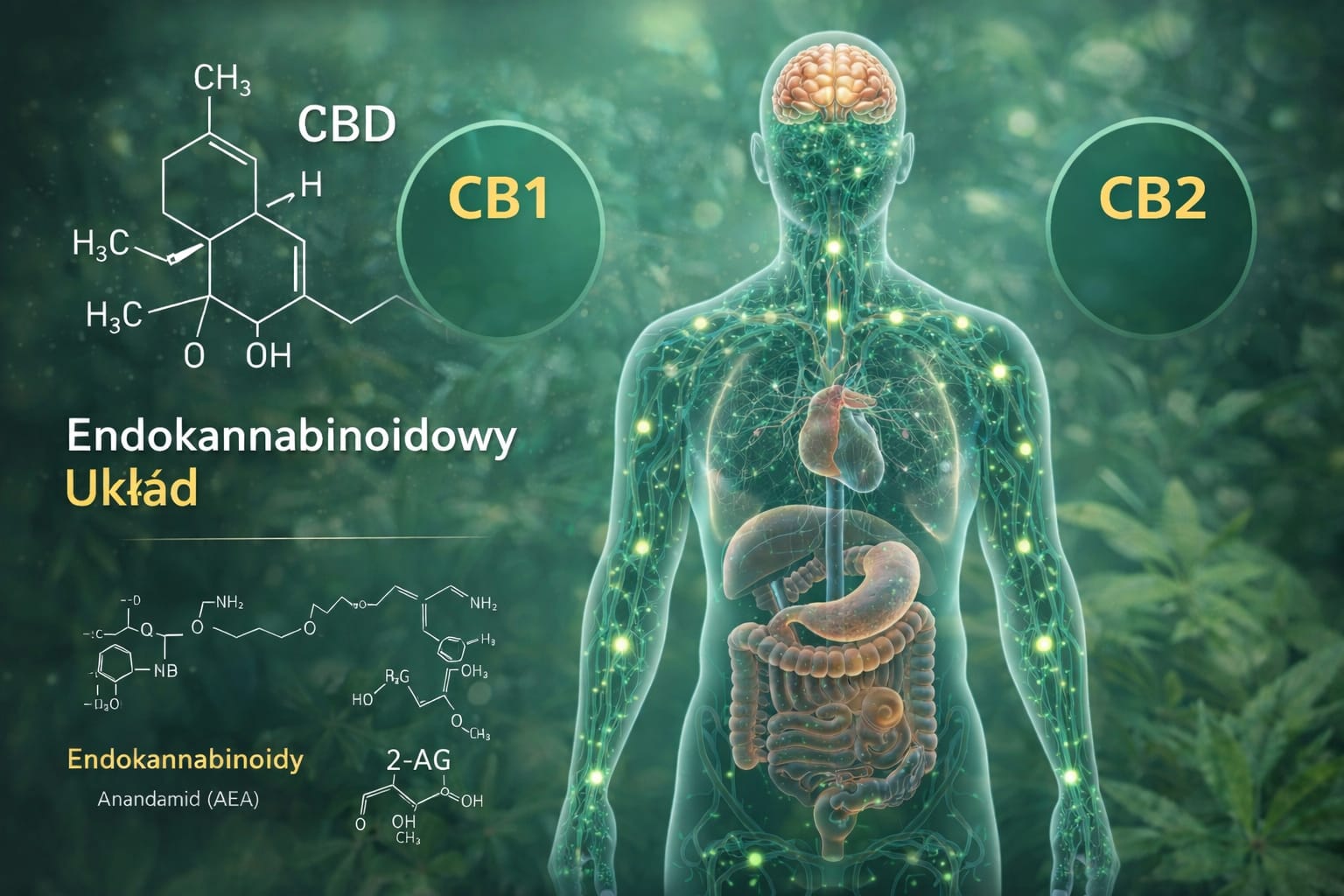
The Endocannabinoid System (ECS) is a complex biological system consisting of:
Elements of this system are found in many tissues of the body, including:
As a result, the endocannabinoid system is involved in regulating many physiological processes.
The best-known components of the endocannabinoid system are cannabinoid receptors.
CB1 receptors are found primarily in:
Their activity is related to the regulation of nerve signals and neurological processes.
CB2 receptors are mainly found in:
Research suggests that they may play a role in the body’s regulatory mechanisms.
The human body itself produces substances resembling plant cannabinoids. These are called endocannabinoids.
The most well-known of these are:
These compounds act as natural signaling molecules and interact with CB1 and CB2 receptors.
Endocannabinoids are synthesized by the body when needed and then quickly broken down by special enzymes.
One of the most important functions of the endocannabinoid system is to participate in maintaining homeostasis, the body’s stable internal balance.
Research indicates that ECS can participate in regulating processes such as:
For this reason, the endocannabinoid system is currently one of the intensively studied biological systems.
Hemp plants contain natural compounds called phytocannabinoids. One of the best known is CBD (cannabidiol).
Phytocannabinoids can interact with elements of the endocannabinoid system, which is why they are the subject of numerous scientific studies.
For this reason, there is growing interest in hemp extracts, such as CBD oil, which contain natural cannabinoids extracted from hemp seed.
The endocannabinoid system was only discovered in the 1990s, so it is still the subject of intense scientific research.
Researchers are analyzing, among other things:
The development of knowledge of this system may in the future contribute to a better understanding of many processes in the body.
The endocannabinoid system is an important component of the human body’s regulatory system. It consists of receptors, endocannabinoids and enzymes, which together participate in maintaining biological balance.
The growing interest in this system is due in part to research into the cannabinoids found in hemp, including CBD. As science advances, it will be possible to learn even more about the role of the endocannabinoid system in the functioning of the body.
Hemp and CBD oil – properties and effects